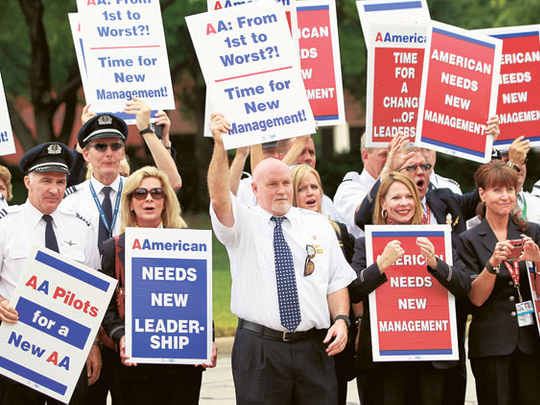
United Airlines CEO Scott Kirby didn’t mince words when he accused American Airlines of obstructing potential industry consolidation by refusing to engage in merger talks. In a rare public rebuke, Kirby suggested that American’s reluctance isn’t just a corporate posture—it’s a strategic misstep with long-term consequences for U.S. air travel, pricing, and operational efficiency.
The comments, delivered during a high-profile industry panel and later reinforced in internal communications, signal growing frustration among top airline executives over what many see as a fragmented and inefficient U.S. aviation landscape. While neither carrier confirmed formal merger proposals, the fact that one CEO is calling out the other by implication marks a notable escalation in tone—and a potential shift in how airlines approach consolidation.
Why United Wanted a Conversation
Behind the public friction lies a strategic calculus: United sees value in reconfiguring the domestic airline map. Unlike international markets, where mega-carriers dominate and streamline global connectivity, the U.S. remains split among four major players—Delta, American, United, and Southwest—with no single airline commanding the kind of scale seen in Europe or Asia.
Kirby’s pitch, it appears, wasn’t about immediate merger paperwork. It was about opening a dialogue on structural alignment. United has spent years investing in long-haul international routes, premium cabins, and hub optimization. But domestic feed—especially into key gateways like Chicago, Denver, and Washington-Dulles—remains a bottleneck.
American Airlines, with its dominant presence at Dallas/Fort Worth and strongholds in Charlotte and Miami, controls critical connecting traffic. A coordinated effort—or outright merger—could create a more seamless network, reduce duplicated routes, and improve scheduling efficiency.
“It’s not about eliminating competition—it’s about eliminating waste,” Kirby remarked during an investor call. “We fly overlapping routes with American that make no sense. We’re both barely profitable on them, yet we keep adding capacity. That’s not good for airlines or customers.”
American’s Resistance: Strategy or Stagnation?
American Airlines’ refusal to entertain talks isn’t a surprise—it’s consistent with its leadership’s long-held stance. CEO Robert Isom has repeatedly emphasized American’s turnaround plan, which hinges on internal transformation rather than external consolidation. The carrier is midway through a fleet renewal, terminal upgrades, and a customer service overhaul.
But critics argue that Isom’s resistance may be more defensive than strategic. American has lagged behind United and Delta in profitability, customer satisfaction, and operational reliability. Merging would force hard decisions—base closures, union negotiations, brand integration—but it could also unlock billions in synergies.
Some analysts interpret American’s stance as fear-driven.
“American is the weakest of the three legacy carriers in terms of financial performance,” said Henry Harteveldt, founding partner at Atmosphere Research Group. “They may worry that merger talks would reveal their vulnerabilities or lead to a United-led integration where American becomes the junior partner.”
There’s also the regulatory question. A United-American merger would trigger intense DOJ scrutiny. The combined entity would control over 40% of domestic capacity, raising immediate antitrust concerns. But Kirby seems unfazed, suggesting regulators might view consolidation as a path to stability, especially amid rising fuel costs and labor shortages.

The Real Cost of a Fractured Industry
The U.S. airline industry operates under a paradox: it’s highly concentrated, yet functionally inefficient. Four airlines control 80% of domestic traffic, but instead of acting as a cohesive network, they compete aggressively on overlapping routes while under-serving secondary markets.
A telling example: the Chicago to Dallas corridor. Both United (via O’Hare) and American (via DFW) operate multiple daily flights, often with large wide-body jets. Yet load factors hover around 75%, and fares remain volatile. A merged airline could consolidate to two daily flights with better aircraft utilization and more predictable pricing.
The inefficiency extends beyond routes. Maintenance networks, crew scheduling, and IT infrastructure are all duplicated. United and American each maintain separate training academies, repair bases, and booking systems—spending billions on redundancy.
In contrast, international carriers like Lufthansa, Air France-KLM, and IAG (British Airways and Iberia) have absorbed cross-border mergers, enabling them to optimize fleets, share lounges, and coordinate schedules across continents. The U.S. hasn’t seen a major airline merger since American and US Airways in 2013.
“The irony is that American Airlines was built on consolidation,” noted aviation journalist Molly Segal. “They merged with US Airways, absorbed TWA, and took over key assets from Trans World and AirCal. Now, when the tables are turned, they’re drawing a line in the sand.”
What a United-American Merger Could Have Looked Like
While speculative, a merger between United and American would have reshaped U.S. aviation. Here’s what it might have entailed:
- Hub Rationalization: Some hubs would shrink or re-focus. Cleveland and Pittsburgh (legacy United cities) might downsize, while Phoenix and Philadelphia (American strongholds) could see role changes.
- Fleet Harmonization: Retiring older Boeing 757s and 767s in favor of efficient 737 MAX and Airbus A321XLR models.
- Loyalty Program Integration: Combining MileagePlus and AAdvantage—two of the largest frequent flyer programs—into a single, more valuable currency.
- Labor Challenges: Merging pilot seniority lists alone would take years and invite union disputes.
- Brand Strategy: “American United” is unlikely. The stronger United brand might prevail, or a new identity emerge.
Passengers could benefit from smoother connections, broader route maps, and more consistent service standards. But there would be trade-offs: reduced competition on certain routes, likely higher fares in thin markets, and job cuts in overlapping departments.
Regulatory and Political Hurdles
Even if both CEOs agreed tomorrow, a merger would face a gauntlet. The Department of Justice has grown skeptical of airline consolidation, citing past mergers that led to higher fares and reduced service.
The Biden administration has taken a hard stance on corporate concentration. In 2023, the DOJ sued to block JetBlue’s partnership with Spirit Airlines, arguing it would harm competition. A full United-American merger would face even fiercer opposition.
Congress would likely weigh in. Lawmakers from states with major airline hubs—Texas, Illinois, North Carolina—would resist any threat to local jobs or flight availability. Unions, while potentially supportive of job security, would demand ironclad contracts.
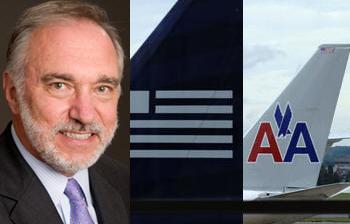
Still, Kirby may be testing the waters. By going public, he shifts the narrative: it’s no longer about United wanting to buy American, but about American blocking industry progress. That framing could soften regulatory resistance over time.
Industry Reaction: Skepticism and Speculation
Wall Street remains divided. Some analysts see logic in consolidation.
“The economics are compelling,” said Dan McKenzie, managing director at Seaport Research Partners. “United and American together could generate $3–$5 billion in annual cost savings. That’s not trivial in a low-margin industry.”
Others warn of overreach.
“This isn’t 2010,” countered Sarah Silbert of JPMorgan. “Consumers are already frustrated with airline service. A merger that reduces choice would be a public relations disaster.”
Travelers appear equally split. Frequent flyers like the idea of combined loyalty benefits. But leisure travelers fear fewer options and higher prices, especially in smaller markets.
Meanwhile, Delta and Southwest are watching closely. Delta, the most profitable U.S. carrier, has no interest in merging. Southwest, with its point-to-point model, remains a wildcard. If United and American tie up in protracted negotiations, Delta could further widen its lead.
What Happens Now? With American holding firm, United is unlikely to pursue a hostile approach. But Kirby’s comments suggest a longer game: pressure American publicly, influence investor sentiment, and position United as the forward-thinking player.
United may instead double down on partnerships—deepening ties with Air Canada, Lufthansa, and ANA—while optimizing its domestic network. American will continue its turnaround, hoping to prove it can compete independently.
But the underlying issue remains: the U.S. airline industry is too big to fail, yet too fragmented to thrive. Without consolidation, carriers may keep sacrificing long-term health for short-term market share.
For passengers, the stalemate means more of the same: frequent flight changes, inconsistent service, and fare volatility. A merger wouldn’t fix everything, but it might force the kind of structural change the industry hasn’t seen in over a decade.
The ball is still in American’s court. But public pressure, financial realities, and operational inefficiencies may eventually force a rethink.
Close the Loop on Airline Efficiency
If United’s message is clear, it’s this: the status quo isn’t sustainable. Whether through merger, alliance, or aggressive network coordination, the U.S. airline industry needs to evolve. American Airlines can resist—but eventually, it may have no choice but to talk.
FAQ
Why did United’s CEO criticize American Airlines? United CEO Scott Kirby criticized American for refusing to engage in discussions about potential consolidation, arguing that merger talks could improve efficiency and service.
Has a formal merger proposal been made? No formal proposal has been confirmed. Kirby’s comments were a public push to open dialogue, not an announcement of a submitted bid.
Would a United-American merger reduce flight options? It could reduce overlapping routes, but might expand service in underserved markets through better resource allocation.
How would customers be affected by a merger? Travelers might see improved connections and loyalty benefits, but could face higher fares on certain routes due to reduced competition.
Is a United-American merger likely? Not in the near term. American has rejected talks, and regulatory hurdles make any merger challenging.
What are the biggest obstacles to a merger? Major obstacles include DOJ antitrust concerns, labor union negotiations, brand integration, and political pushback.
Could American Airlines change its stance? Yes—especially if financial pressures mount or United continues to gain competitive ground in key markets.
FAQ
What should you look for in United CEO Slams American Airlines for Blocking Merger Talks? Focus on relevance, practical value, and how well the solution matches real user intent.
Is United CEO Slams American Airlines for Blocking Merger Talks suitable for beginners? That depends on the workflow, but a clear step-by-step approach usually makes it easier to start.
How do you compare options around United CEO Slams American Airlines for Blocking Merger Talks? Compare features, trust signals, limitations, pricing, and ease of implementation.
What mistakes should you avoid? Avoid generic choices, weak validation, and decisions based only on marketing claims.
What is the next best step? Shortlist the most relevant options, validate them quickly, and refine from real-world results.