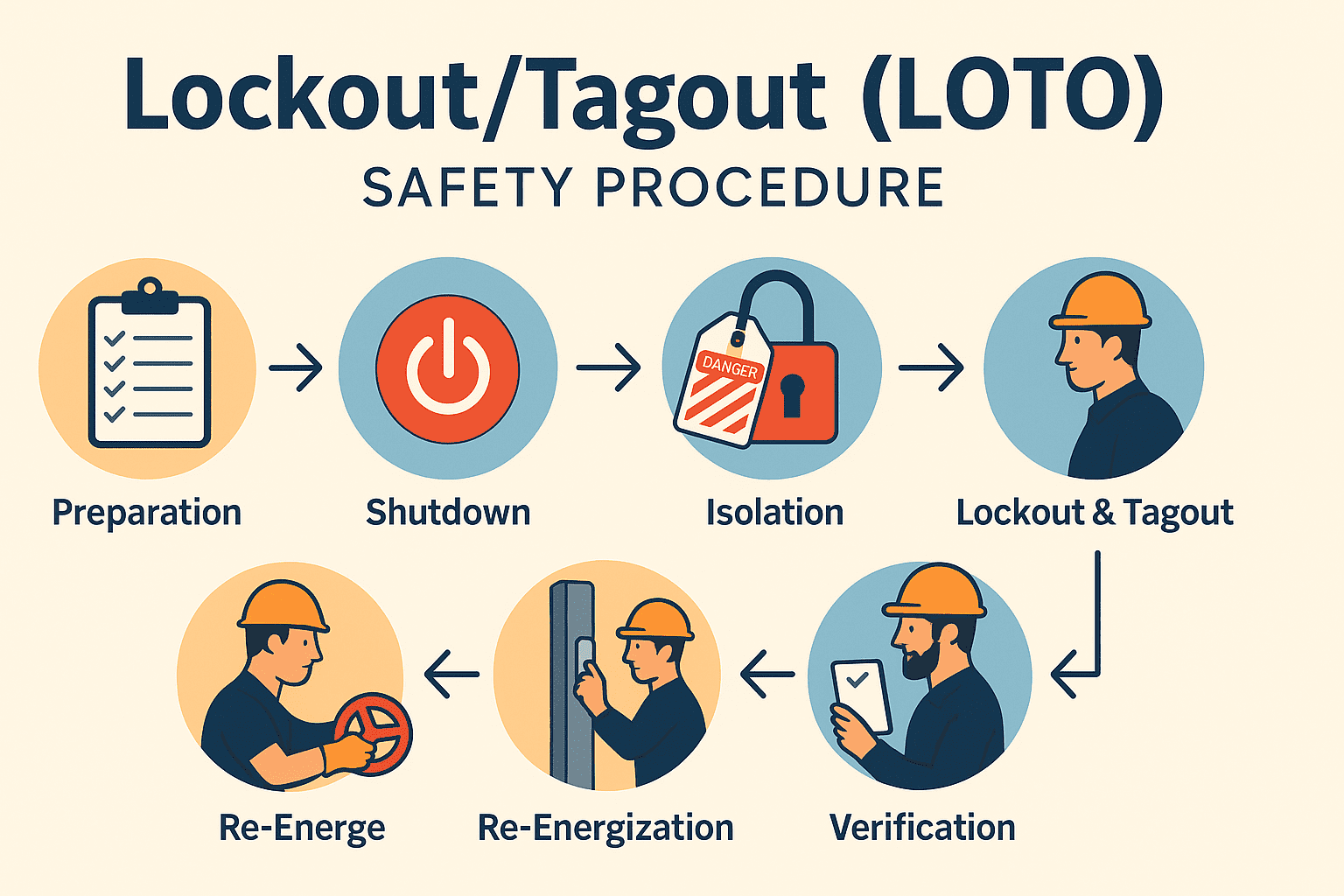
Every year, hundreds of workers suffer serious injuries—or worse—because machinery was accidentally energized during maintenance. The solution isn’t complex, but it is non-negotiable: a properly executed lockout tagout (LOTO) program. Yet, despite OSHA standards and decades of awareness, violations remain common. Workers assume equipment is safe when it’s not. Supervisors skip steps under time pressure. Procedures are outdated or poorly communicated.
The truth? LOTO isn’t just about locking a switch. It’s about discipline, clarity, and a culture that treats energy control like a lifeline—because it is. These lockout tagout safety tips are drawn from real industrial environments, regulatory requirements, and near-miss reports. They go beyond compliance to address the human and operational gaps that lead to accidents.
Understand What Lockout Tagout Really Means
Lockout tagout is a safety procedure used to ensure that dangerous machines and energy sources are properly shut off and cannot be restarted before maintenance or servicing is complete.
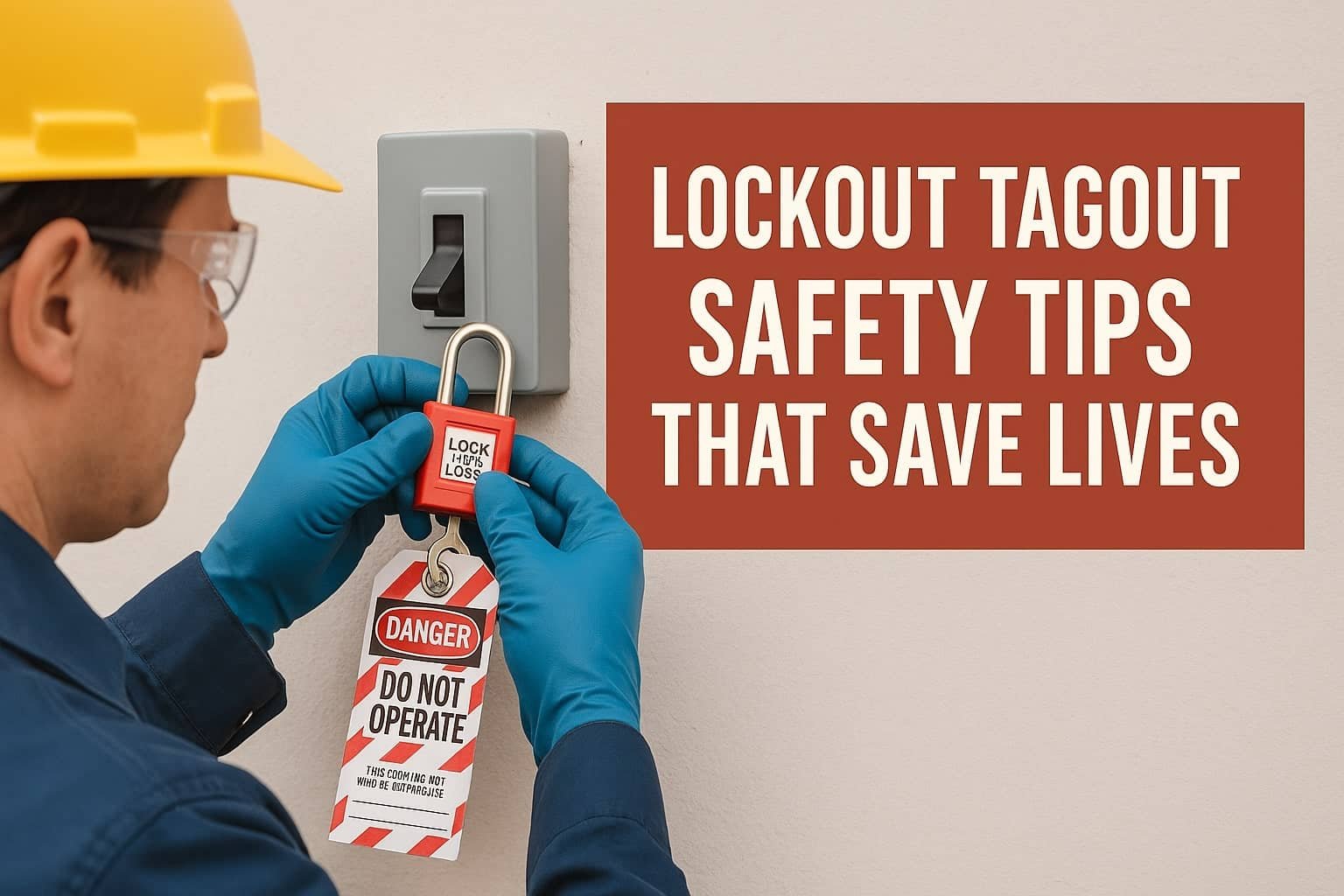
- Lockout refers to physically locking the energy-isolating device (like a circuit breaker or valve) with a personal lock.
- Tagout involves attaching a warning tag to the locked device, indicating who locked it, why, and when.
Common mistake: Using tagout alone on equipment that can be locked. Tags can be ignored or removed. Locks cannot—unless you have the key.
OSHA’s standard (29 CFR 1910.147) requires both when possible. The goal isn’t just compliance—it’s creating a zero-energy state. That means no electrical, mechanical, hydraulic, pneumatic, chemical, or thermal energy can unexpectedly release.
Practical example: A conveyor belt system in a packaging plant must be stopped, isolated from its power source, and locked before a jam is cleared. If the start button could still activate it—even remotely—the system isn’t truly secured.
Develop Clear, Equipment-Specific Procedures
Generic LOTO checklists fail when they don’t match real equipment. A one-size-fits-all approach leads to skipped steps and guesswork.
Each machine or process should have a documented energy control procedure that includes:
- Type and magnitude of energy sources
- Steps to shut down, isolate, block, and secure the equipment
- Specific location and type of lockout devices
- Verification that zero-energy state is achieved
Workflow tip: Involve maintenance technicians in writing these procedures. They know where residual energy hides—like pressure in hydraulic lines or inertia in flywheels.
Realistic use case: In a printing facility, a press operator shuts down the machine and removes the power plug. But the ink roller system retains stored energy in compressed air valves. Without releasing that pressure and locking the air supply, a sudden release could cause the rollers to move violently.
Documented procedures prevent assumptions. They also speed up service time because workers aren’t improvising.
Train Everyone—Not Just Maintenance Staff
LOTO isn’t only for technicians. Anyone who operates, cleans, troubleshoots, or works near machinery must understand the program.
Training should cover:
- How to recognize when LOTO applies
- How to verify a machine is locked out
- What to do if they find a locked device
- The danger of attempting to bypass a lock or tag
Common mistake: Operators assume that because they didn’t initiate maintenance, they don’t need to follow LOTO rules. But if they’re clearing a jam or changing a tool, they’re servicing the machine—and energy control is required.
Example: A janitor enters a food processing area to clean and notices a mixer isn’t running. They assume it’s safe and reach in to wipe blades. Unbeknownst to them, a technician is troubleshooting the motor and hasn’t applied a lock. The mixer powers on during a test cycle.
This is why OSHA requires “authorized” and “affected” employee training. Authorized employees apply locks. Affected employees work with or near the equipment and must know the risks.
Use the Right Lockout Devices—And Inspect Them
Not all locks are created equal. Using the wrong device compromises the entire system.
Key considerations:
- Locks must be durable, standardized, and identifiable. They should only be key-retaining (key cannot be removed when lock is open).
- Tags must be legible, substantial, and non-reusable. They should include the worker’s name, department, and reason for lockout.
- Group lockout stations should be available for complex systems with multiple energy sources.
Limitation: Padlocks from a hardware store are not LOTO-compliant. They lack uniqueness, durability, and employer control. Use only locks issued by the company with unique keys or combinations.
Checklist for device inspection: - Are locks rust-free and functional? - Are tags faded or torn? - Are hasps, valve locks, or circuit breaker locks properly sized for equipment? - Are lockout stations fully stocked and accessible?
Replace damaged or missing components immediately. A broken lock is as dangerous as no lock.
Never Skip the Verification Step
Applying a lock doesn’t guarantee safety. You must verify the equipment is de-energized.
The verification process includes:
- Turning off the machine using normal controls
- Shutting off primary energy sources
- Applying locks and tags
- Releasing or blocking stored energy (e.g., bleeding lines, discharging capacitors)
- Attempting to restart the machine using normal operating controls—with the lock still in place
If the machine operates or moves, the energy isn’t isolated. Go back and recheck.
Common mistake: Skipping the try-out because “it’s been done a hundred times.” Stored energy doesn’t care about routine.
Real-world scenario: A technician locks out a compressor but doesn’t bleed the air tanks. When they open the casing, residual pressure releases, sending debris flying. Verification would have exposed the hidden hazard.
Verification isn’t a formality. It’s the final confirmation of safety.
Control Group Lockout Scenarios with Care When multiple people work on the same machine, group lockout procedures apply. This is high-risk territory—miscommunication can be fatal.
Best practices:
- Use a group lockout box or hasp.
- Each authorized employee applies their personal lock to the box.
- The primary authorized employee (often a supervisor) applies the final lock.
- Only when all individual locks are removed can the system be re-energized.
Critical rule: No one should remove another person’s lock. Ever. Even if they’re “sure” the work is done.

Example: Three technicians service a boiler. Each locks out a different valve. One finishes early and removes their lock. Another starts up a subsystem for testing, assuming it’s safe. The third technician is still inside the combustion chamber.
Group lockout prevents this. All locks remain until every worker is clear and accounted for.
Avoid These 5 Common LOTO Mistakes
Even experienced teams make errors under pressure. Recognize these pitfalls:
- Using only tags when locks are available – Tags are warnings, not barriers.
- Borrowing or sharing lock keys – Each lock must be personal and non-transferable.
- Not controlling all energy sources – Missing a hydraulic line or capacitor is a recipe for disaster.
- Rushing re-energization – Failing to ensure all tools are removed and workers are clear.
- Failing to review procedures annually – Equipment changes, but outdated LOTO steps don’t reflect new risks.
Pro tip: Conduct periodic audits. Walk through LOTO procedures with a clipboard and stopwatch. Time how long it takes, note confusion points, and fix gaps.
Make LOTO Part of Your Safety Culture
Compliance doesn’t equal safety. You can follow every OSHA rule and still have a near-miss if workers don’t take it seriously.
Build a culture where:
- Applying a lock is as routine as wearing a hard hat
- Supervisors model correct behavior
- Workers feel safe stopping work if LOTO isn’t followed
- Incidents and close calls are reported and reviewed
Realistic use case: A shift supervisor notices an operator clearing a paper jam without locking out. Instead of reprimanding, they pause the line, retrain the team, and post a visual aid near the machine. The message: safety isn’t punitive—it’s protective.
When LOTO becomes habit, not a hurdle, risk drops dramatically.
Final Actions: Improve Your LOTO Program Today
Start now. Don’t wait for an incident.
- Audit your current procedures – Are they machine-specific? Updated? Accessible?
- Re-train staff annually – Include refresher drills and real scenarios.
- Inspect lockout devices quarterly – Replace damaged or missing components.
- Empower workers to stop unsafe acts – No lock, no work.
- Review every maintenance incident – Even near-misses reveal system flaws.
Lockout tagout isn’t just a rule. It’s a promise: no one gets hurt because energy was left uncontrolled. Implement these safety tips with consistency and care. Lives depend on it.
FAQs
What is the most common lockout tagout violation? Failing to use lockout when performing servicing or maintenance on machines with hazardous energy sources—especially during routine tasks like clearing jams.
Can tagout be used instead of lockout? Only if a lock cannot be applied and the tag provides equivalent protection. OSHA requires lockout whenever possible.
Who is responsible for applying a lockout device? Each authorized employee performing servicing must apply their own lock and tag.
How often should LOTO procedures be reviewed? At least annually, or whenever equipment, processes, or energy sources change.
What should a tag include? The worker’s name, department, date, and reason for the lockout.
Can a supervisor remove a lock if the worker is unavailable? Only under a formal, documented procedure involving verification that the worker is not at risk and attempts to contact them.
What equipment requires LOTO? Any machine or process that uses hazardous energy and requires servicing where unexpected startup could cause injury.
FAQ
What should you look for in Lockout Tagout Safety Tips That Prevent Workplace Injuries? Focus on relevance, practical value, and how well the solution matches real user intent.
Is Lockout Tagout Safety Tips That Prevent Workplace Injuries suitable for beginners? That depends on the workflow, but a clear step-by-step approach usually makes it easier to start.
How do you compare options around Lockout Tagout Safety Tips That Prevent Workplace Injuries? Compare features, trust signals, limitations, pricing, and ease of implementation.
What mistakes should you avoid? Avoid generic choices, weak validation, and decisions based only on marketing claims.
What is the next best step? Shortlist the most relevant options, validate them quickly, and refine from real-world results.